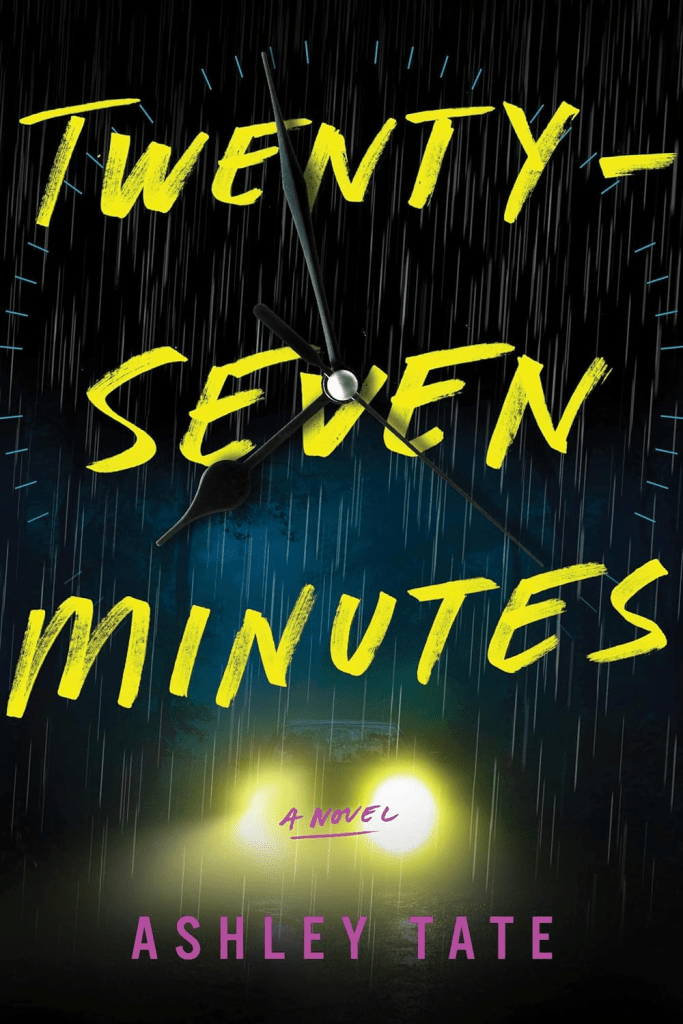
Twenty-Seven Minutes by Ashley Tate
Publisher: Poisoned Pen Press
Published: January, 2024
Pages: 384
Genres: Psychological thrillers, suspense, drama
For the last ten years, the small, claustrophobic town of West Wilmer has been struggling to understand one thing: Why did it take young Grant Dean twenty-seven minutes to call for help on the fateful night of the car accident that took the life of his beloved sister, Phoebe?
Someone knows what really happened the night Phoebe died. Someone who is ready to tell the truth.
With Phoebe’s memorial in just three days, grief, delusion, ambition, and regret tornado together with biting gossip in a town full of people obsessed with a long-gone tragedy with four people at its heart. The caretaker, the secret girlfriend, the missing bad boy, and a former football star―just kids back then―are forever tied together the fateful rainy night Phoebe died.
I first heard about this book on a YouTube video. Ashley Tate, the author, came on the Reedsy channel to give a master class on novel writing and, in the end, she read the prologue to her soon-to-be-published debut novel. It hooked me right away, so I closed the video and immediately pre-ordered the book on Amazon.
Every other day I would open Amazon to check if the book was out even though I knew it wasn’t⎯I just couldn’t wait to read it. And when it finally showed up on my Kindle, rushed to reread the prologue, remembering just how amazing it had been. It was the perfect introduction: it gave us the setting, character, conflict, tone. But, unfortunately, the chapters that followed did not deliver the same level of prose.
The rest of the book didn’t read like it was the same story as the prologue at all. The opening was polished, concise, musical (the countdown to Phoebe’s death had such a beautiful cadence to it), and held just enough information to help me create a connection with Phoebe, whom I had only just met and was now dying, and I was ready to find out why and how she died. I wish it hadn’t felt like such hard work to reach the end and uncover the truth.
The story takes place over three days and it includes the points of view of the characters who were involved in what happened the night Phoebe died, but without character development or any clear plot, it dragged on for what felt like much, much longer. I had a really hard time telling the characters apart because they all read the same. The one character who stood out was Becca, but mostly just because she was incredibly annoying.
Besides being very similar, all characters were extremely one-dimensional. Rather than having complex inner realities that pushed the plot forward, their emotional outbursts felt incredibly juvenile. This resulted in tedious internal monologues and awkward dialogue. Every conversation felt like an info dump⎯situations and feelings were spelled out and the text had a dramatic tone that was too soap opera-y. If you had told me these characters were in high school, I would have believed you. Sadly, this wasn’t because they were inherently immature or emotionally stunted due to the tragedy they’d lived through, but because the writing was so clumsy and overdramatic that they just didn’t read like adults.
Now, I don’t mind unlikable characters. I love them, actually, just as much as I love likable ones, I just need them to be compelling. However, the characters in this book didn’t add much to my understanding of the story through their internal worlds and every new POV felt like wasted time. I stayed until the end only because I wanted to find out the big mystery of Phoebe’s death, which also ended up falling flat for lack of emotional buildup.
Situations and places were constantly repeated, so I was reading the same thing again and again, without any advancement to the story or the emotional development. Instead, I was told how to feel, rather than given characters to relate to and situations to interpret on my own. That was a shame because the premise of this book had so much potential.
I also love small town stories where the town itself has such great presence that it becomes another character (I’m looking at you, Stars Hollow!), but this was another area where this novel fell short. The townspeople were like little robots that showed up out of the blue, gave the strangest and most unnatural monologues and left never to be seen again.
But if I had to pick one battle with this book, it would be the (ab)use of italics: every single flashback was in italics, and there were so, so many of them. They would go on for several paragraphs, which had me straining my eyes and begging for mercy. Sometimes they interrupted the present story for so long that I couldn’t remember what had been happening in the first place, and most of them didn’t provide any interesting background information for the characters. In addition to the many flashbacks included in the current timeline, there were also individual chapters titled “Ten Years Ago”, which were solely (and very clearly) dedicated to the past, but those were also entirely in italics. It was so unnecessary.
All in all, the immaturity and the melodrama would have been fine had they been character traits, but they all pointed to writing problems that made the book too superficial and exaggerated to be enjoyable.
Still, I will be waiting for new books by this author, because that prologue was just so good, I know she has the potential to give us an all-rounded story. This was her debut novel, so with time and experience, I really believe she can come out with something great.
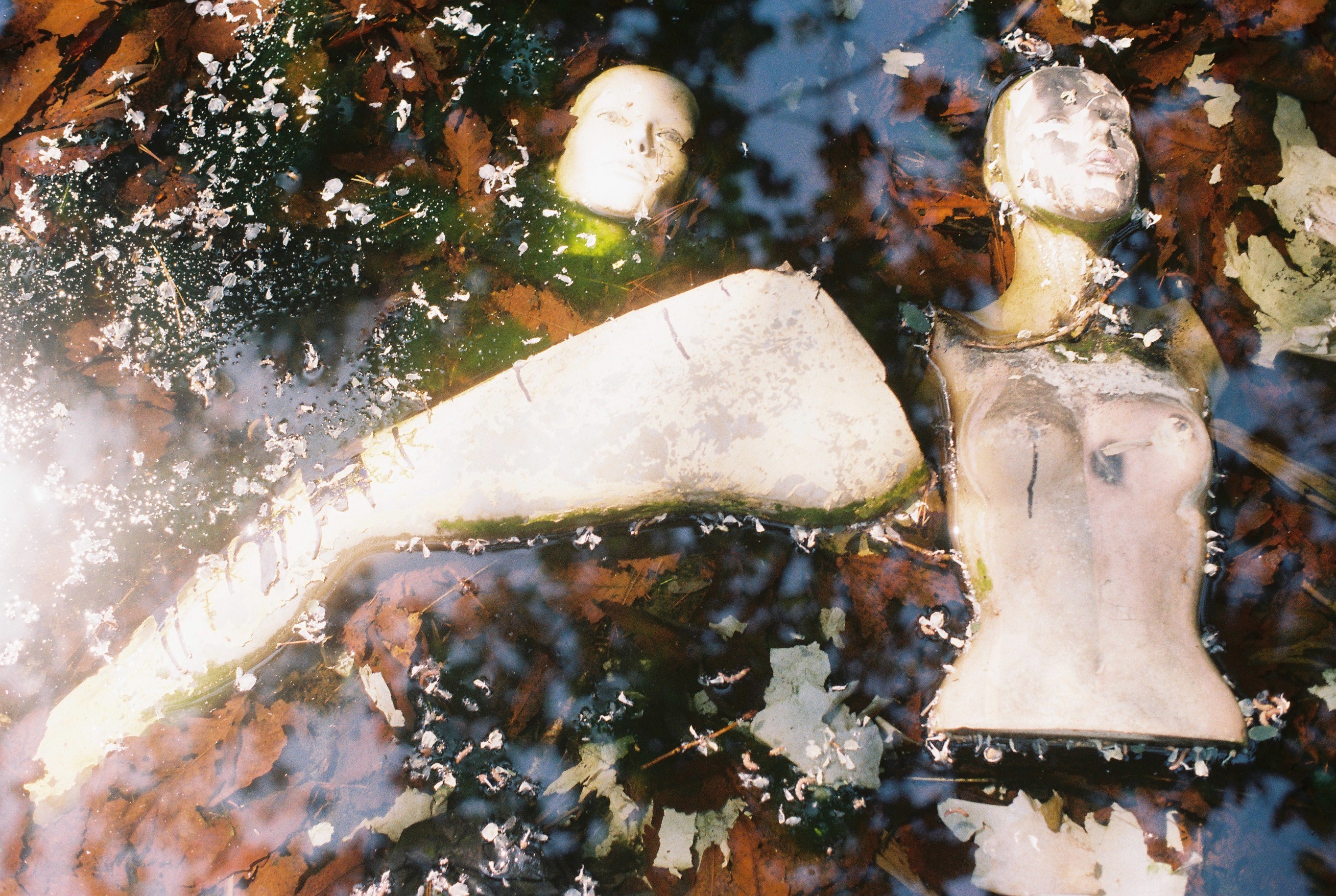
It was very hard choosing a picture for this review, as I was ultimately uninterested in the characters or the story, but I ended up finding one that represents the only thing that stuck with me: Phoebe, dying in the prologue.
The mannequins in this photo, much like Phoebe, were somewhere they weren’t originally meant to be, broken and forgotten, their purpose lost. Their empty eyes, staring up at nothing, remind me of her lying on the bridge, wondering at the repercussions of her death even as it slipped away from her.
I took this picture on an abandoned swimming pool hidden in the woods of Seoul National University. I went there to take pictures for a friend but ended up taking quite a few for myself. The area had an eerie vibe I really enjoyed as a horror fan⎯as a matter of fact, some people were filming a horror movie when we arrived. I had the time of my life!

 Proseography
Leave a comment